
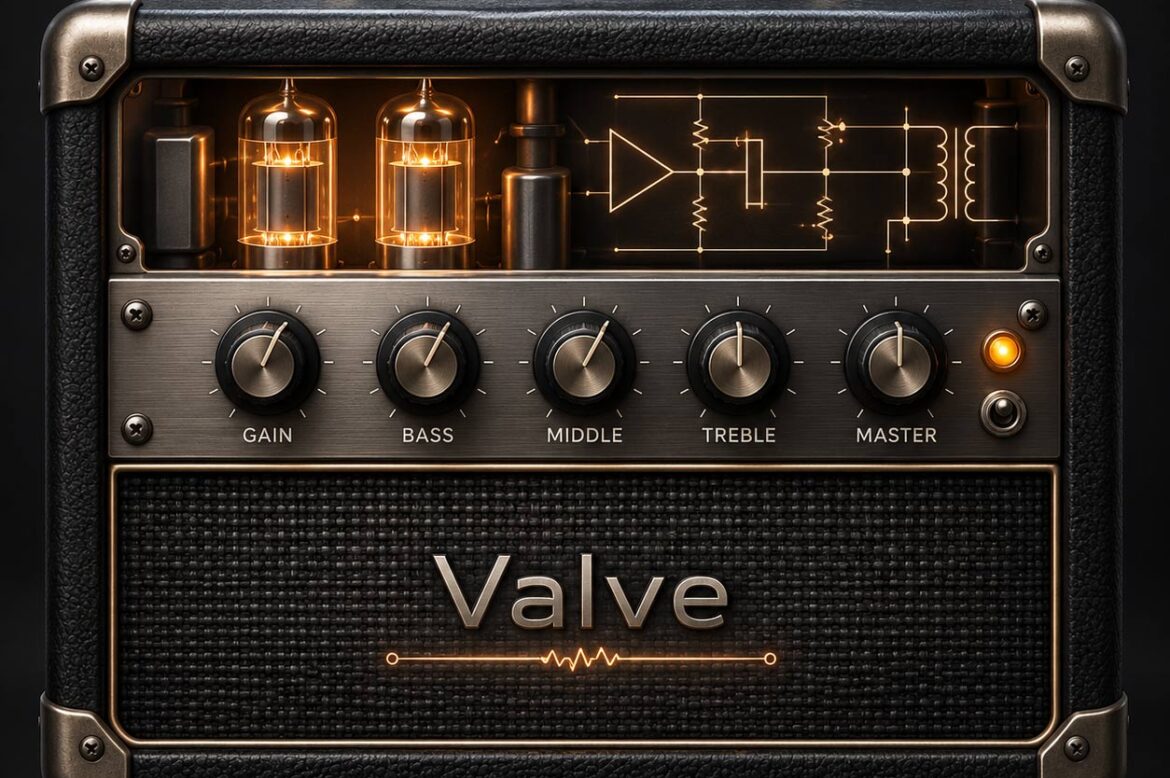

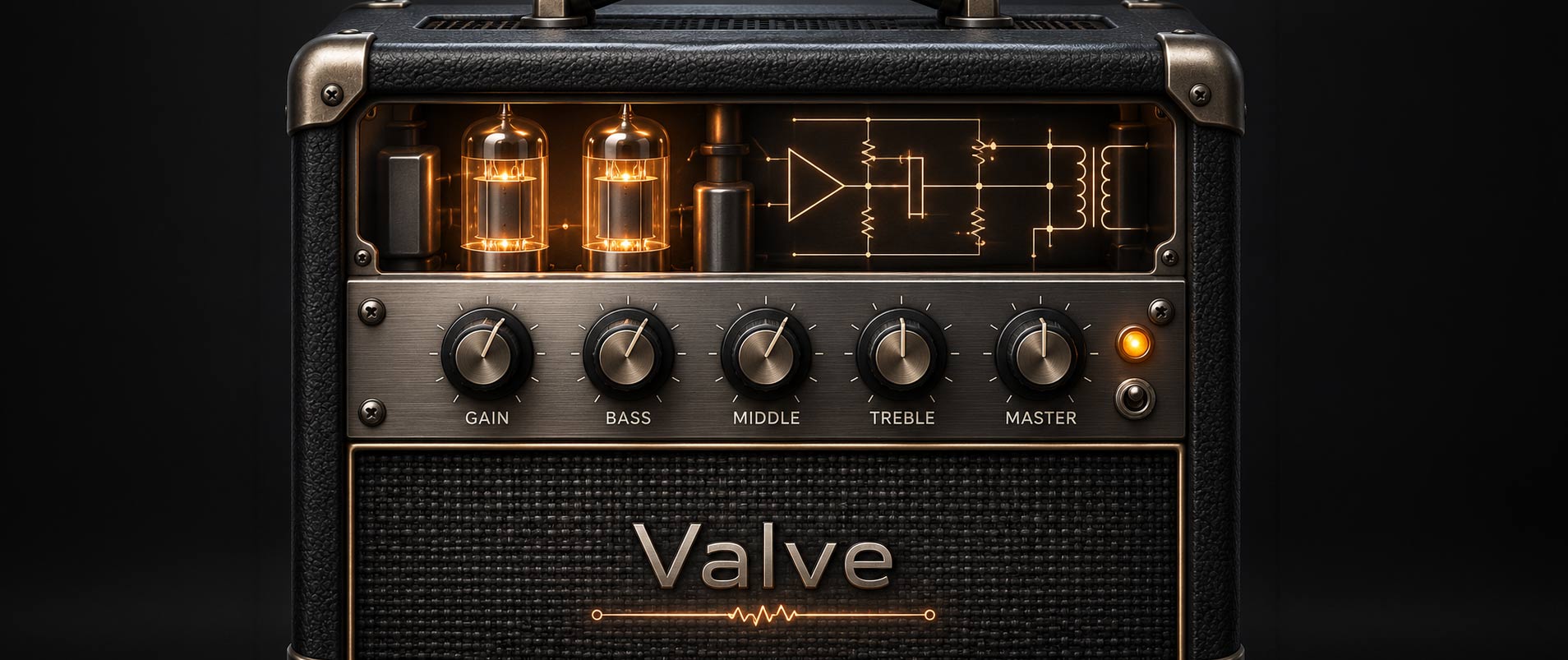
Introducing Valve
Axion now has a second way to make amp tones. Alongside NAM profiles, which learn the sound of a real amp from recordings, Axion now has Valve, creating amp and pedal models that are simulated directly from their circuit schematics: tubes, diodes, and all.
The first Valve device is a two-stage tube preamp with a passive three-band tone stack. It is in Axion’s device browser today as a new Amp device, with two factory presets to start from.
Profiling vs modeling
NAM and Valve both produce amp tone, but they get there from opposite directions.
NAM profiling answers: what does this exact rig sound like? A neural network listens to test signals played through a real rig including amp, cabinet and mic, and learns to reproduce its output. The result is remarkably faithful to that amp, but it requires all of the knobs to be modeled which takes a tremendous amount of data and capture time.
Valve’s modeling answers: how does this circuit behave? Instead of learning from recordings, Valve simulates the electronics: resistors, capacitors, potentiometers and vacuum tubes, solved as one connected network. The knobs are the actual potentiometers in that circuit. Turning Drive changes a resistance, and everything downstream reacts the way the physics says it should.
Where it stands, and what’s next
Valve is included in Axion to allow you to do both modeling and profiling in the same rig as you wish. It sounds amazing, with warm, rich analog feel and runs comfortably in real time, but we’re still adding features and schematic-based models. As new models are added we will be including them in the device list.
Read this far? Then you are a gear nerd so we have some news for you: We’re also about to announce a feature that will flip the NAM world upside down. 🙂 Stay tuned for the next update!